Star Wars Convergence: The Mandalore Plot
Part 1: 2000 BBY - 22 BBY

Introduction
How Star Wars: The Clone Wars (TCW) impacted the continuity of the Star Wars Expanded Universe (EU) back in its original run is well documented, and no corner of the Galaxy was more affected by TCW’s storytelling than Mandalore. With the canon reset in 2014, Mandalore’s history has become more consistent, but has still backtracked on the history TCW presented, showing that Mandalorian warriors are not all members of Death Watch as TCW decided to show. As a part of my combining Canon and Legends material into one cohesive timeline, I’ve chosen to reconcile Mandalore in writing first. How the planet of conquerors and warriors was transformed into the homeworld of pacifism and neutrality; how the leader of Mandalore changed from the Mand’alor to the Duchess of Kalevala; and how Death Watch fractured in the aftermath of their defeat. This will be part 1 of a series on Mandalore, I was originally going to delve into the Clone Wars here, but I’ve decided to keep this focused on the pre-Clone Wars history of Mandalore. Part 2 will exclusively deal with Mandalore during the Clone Wars and the immediate aftermath, and Part 3 will cover probably 17 BBY-5/6 ABYish. Where we go from there is still up in the air, but at least 3 parts is the goal at present for this project.
The End of the Old Republic
What Mandalore’s history looks like prior to the devastation of its surface has little controversy. Most accept the abject fact that Mandalore was a homeworld of conquerors and war mongers, committing genocide and worse across hundreds of worlds. Mandalore was a well known ally of the Sith in almost every galactic conflict.
Except one.
The Light and Darkness War raged across the Galaxy from 1010-1000 BBY, following centuries of Jedi and Sith conflict; and, to the Galaxy’s surprise, Mandalore took no official side. While the Republic controlled the majority of the Core and the Colonies, the Brotherhood of Darkness held several worlds in the Outer Rim, particularly in Hutt Space. To combat the torrential Sith threat over the centuries, the Jedi reorganised themselves into a feudal system, and many took up the title of Jedi Lord in opposition to their Sith adversaries. Of course, when discussing the Jedi Lords, most point to the more famous ones, Lord Hoth, or Valenthyne Farfalla; however, there is another Jedi Lord who held territory for decades only to fall during the New Sith Wars, Jedi Lord, and Mand’alor, Tarre Vizsla.
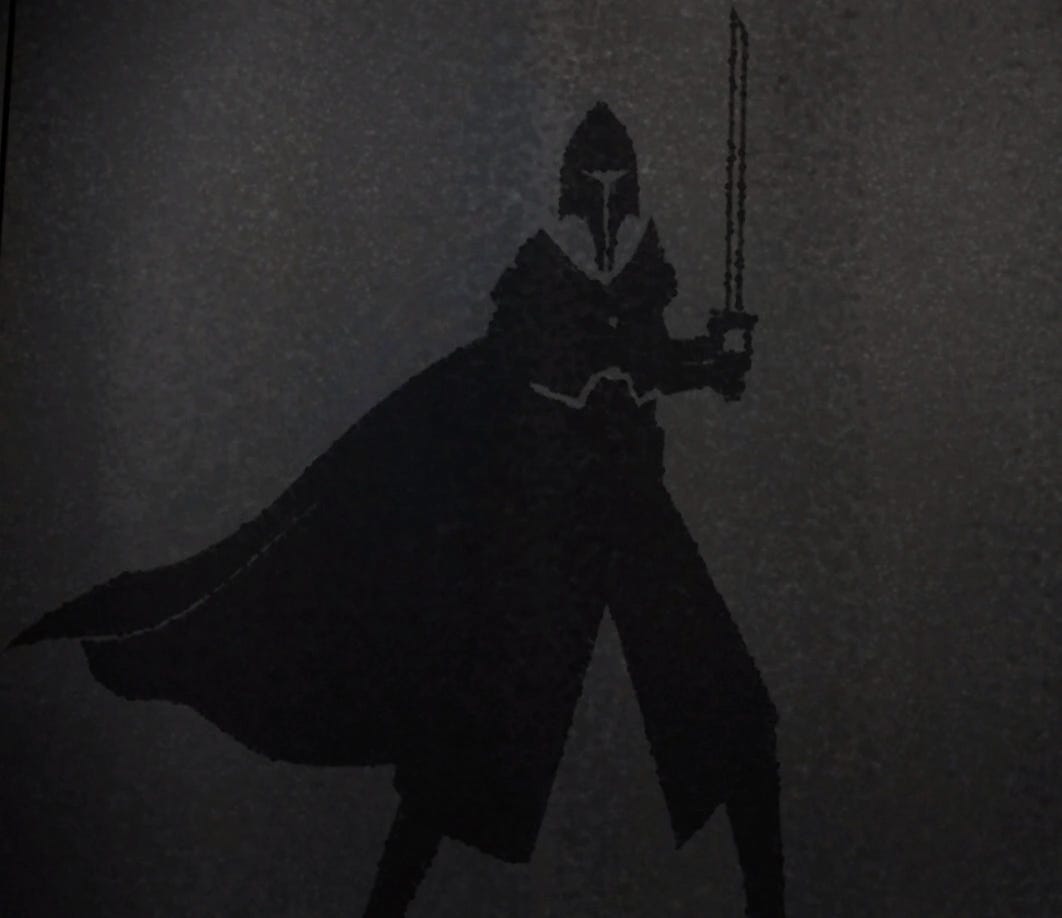
Wielder of the Darksaber, Lord of Keldabe, Tarre Vizsla joined the Jedi Order in 1050 BBY and after being dispatched to his homeworld in 1004 BBY, in an effort to prevent the then Mand’alor, Mandalore the Uniter from supporting the Brotherhood of Darkness, Vizsla laid claim to the fiefdom of his homeworld. Vizsla entered into single combat against Mandalore the Uniter, and killed him on the streets of Keldabe. He then laid claim to the title of Mand’alor, and became Lord of Mandalorian Space. Vizsla’s rule was relatively strong, and through a series of marriage pacts and political alliances, Clan Vizsla began to encompass multiple other clans of Mando’ade from across Mandalorian space. Clans like Wren and Saxon folded into Vizsla, and soon the House of Vizsla was formed. Other powerful Mandalorian families soon followed suit. The dukedom of Kalevala fell to the new House Kryze, and there soon began a close political allyship between Tarre Vizsla and the Duke of Kalevala.
When Lord Hoth called the banners of the Jedi Lords to wage war with Sith Lord Skere Kaan’s Brotherhood of Darkness, Tarre Vizsla was one of the first to answer the summons. While Hoth led forces across the Galaxy, Vizsla travelled to protect Hoth’s lordship on his namesake world. Hoth had been born into the lordship of Kaal, but it was Hoth where his power was born, and it was Hoth that the Army of Light needed for their morale. Controlled by the Sith, and a planet of no military importance, the Republic had allowed the Sith’s rule over the Greater Javin to go unchallenged, but the Army of Light would allow Sith rule no longer. While Hoth led Jedi forces across the Galaxy in objectively more important military campaigns, it was decided a Jedi Lord of strong political standing should retake Hoth’s namesake. It would be Vizsla who led its liberation.
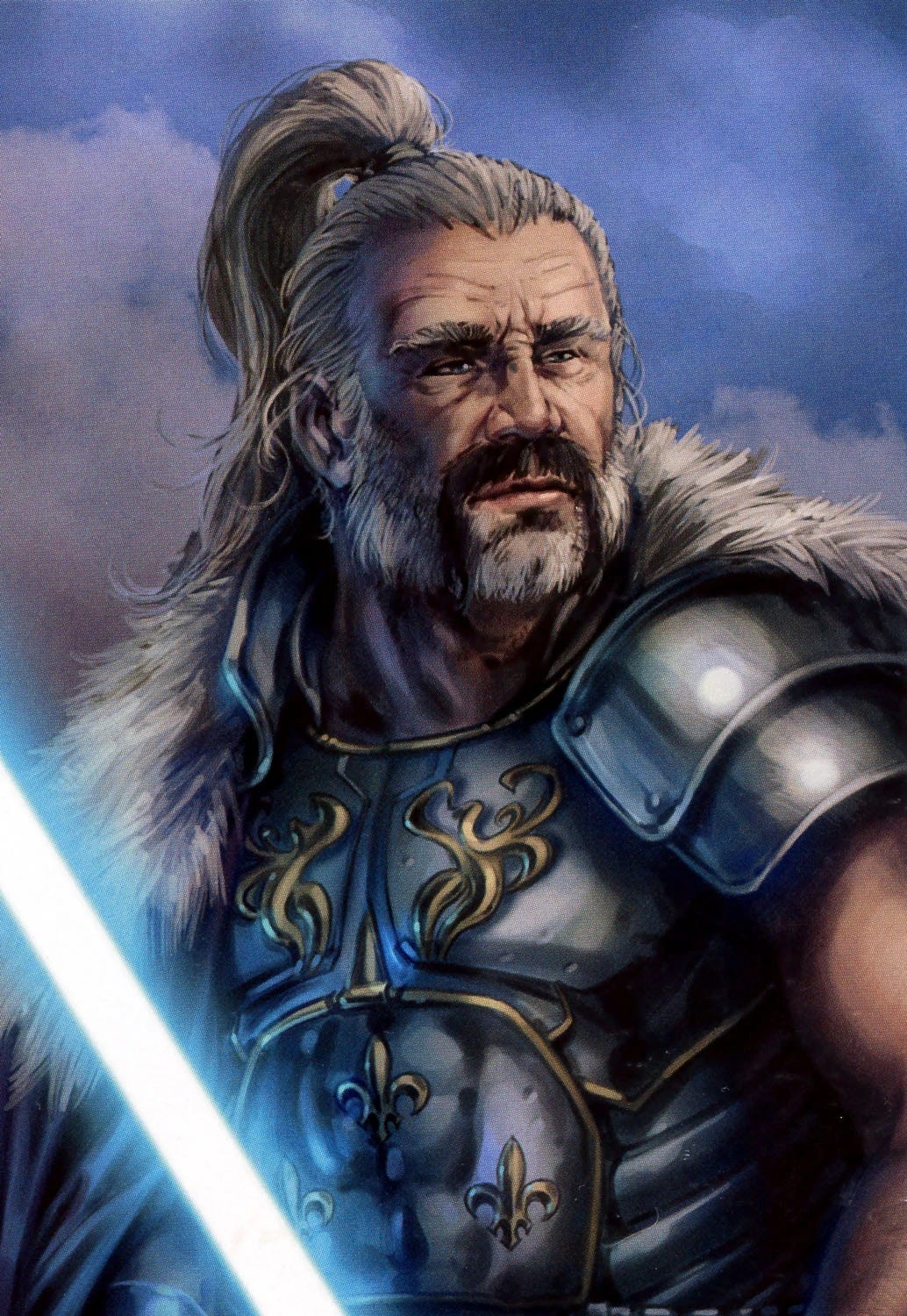
With a combined force of Jedi and Mandalorians, Vizsla’s first major victory was at Bomis Koori, where he established enough of a foothold for the Army of Light. That victory was succeeded by a brutal campaign into the Greater Javin, a campaign that led to Bespin falling to the Jedi, and the Sith retreating back to Hoth itself.
The battle on Hoth dragged out for months. Feigned defeat was followed by feigned victory, and each day seemed to draw closer to a Jedi retreat. That was until the Sith suddenly disappeared from Hoth, or at least, the Dark Lords did. Weeks later, Vizsla would learn the reason behind the Sith retreat. Lord Kaan, in an effort to wipe the Jedi out once and for all, had summoned every Dark Lord of the Sith to the planet Ruusan, and in turn, Lord Hoth had done the same. The Jedi on Hoth had lost all outside communication with the Army of Light the moment they landed on Hoth, and, as a result, had not received the call to go to Ruusan with their Jedi Brethren.
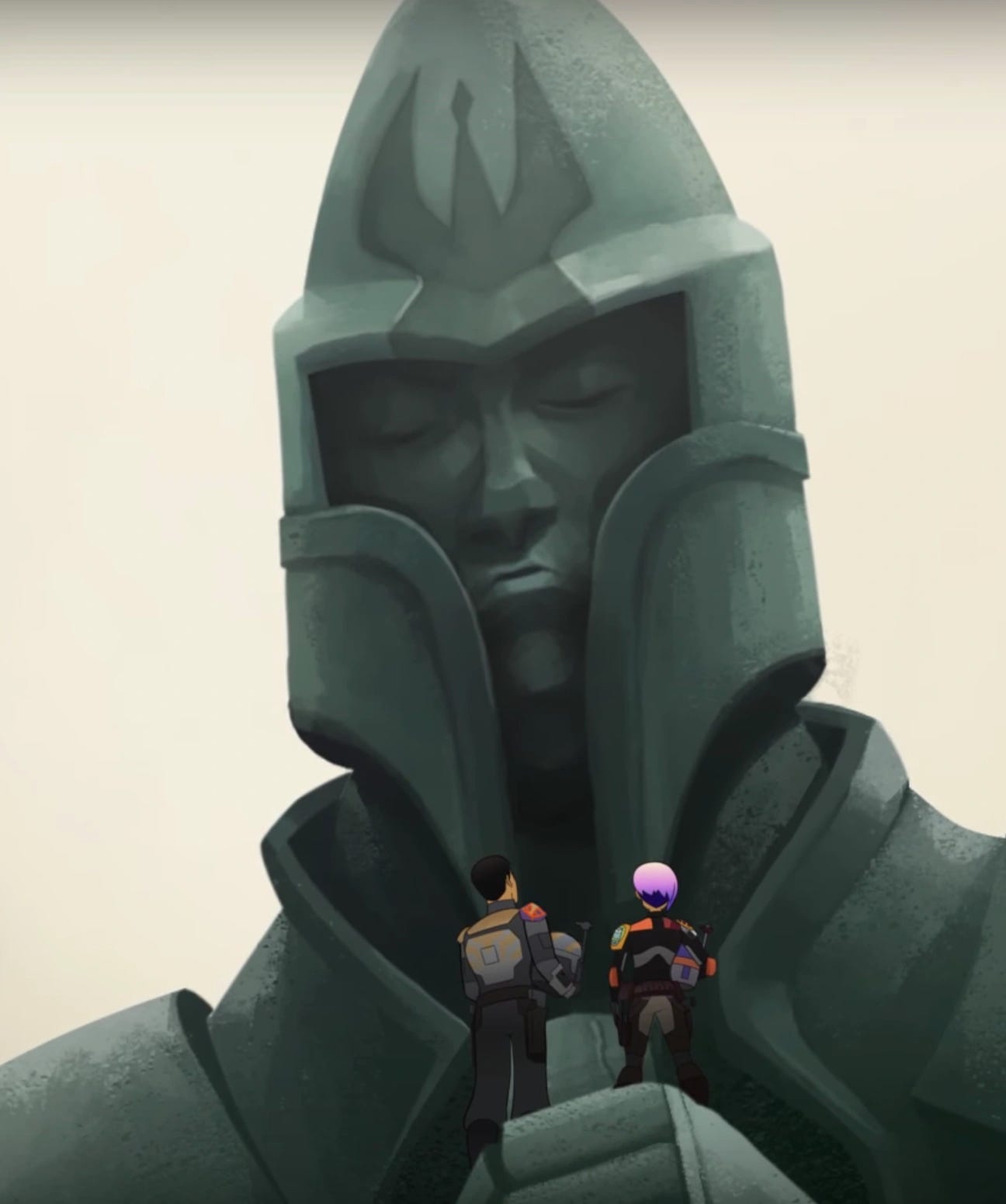
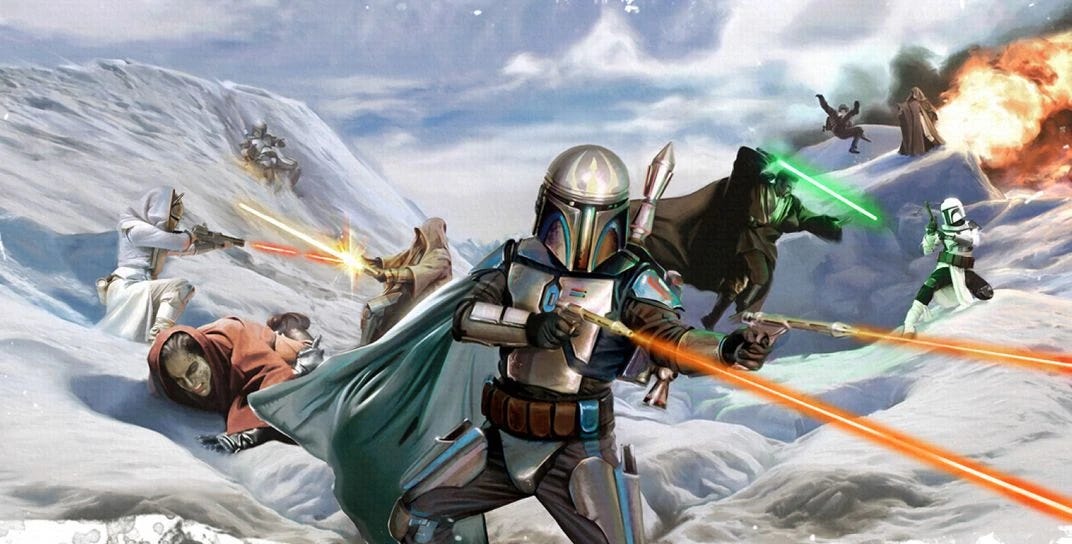
While the Jedi finally defeated the Sith Lords at Ruusan, Vizsla continued to battle the Sith Army on Hoth. In a final assault on the now deceased Lord Hoth’s fortress, nestled in the Drift Hills, which the Sith had used as their headquarters for the campaign, Vizsla finally managed to drive the Sith off of the frozen world. The Jedi had claimed another victory, but at a terrible cost. On the steps of Lord Hoth’s fortress, Vizsla was struck down by blaster fire from Sith Troopers, and the flag of Army of Light was planted in the ground of Hoth by the soldiers that fought by Vizsla’s side.
The Dral’Han
The aftermath of Ruusan had already caused great upheaval in the Galaxy. The Republic was reborn through the Ruusan Reformations that sought to reorganise the Republic into a new form of galactic government. Under Supreme Chancellor Tarsus Valorum, the first non-Jedi chancellor in over a century, the Republic began a new age of progress and renewal, and for a while, this new age managed to reach Mandalore.
Valorum had ordered a series of unification campaigns across the Outer Rim, and in the beginning, the Mandalorians had been the first to aid the Republic Judicial Forces as mercenary groups, conquering Sith holdouts and uprooting crime lords along the Rim. This continued for over a century before civil unrest on Mandalore itself drove the Mando’ade home.
In the fallout of Tarre Vizsla’s death, House Vizsla had become obsessed with the fallen Jedi’s lightsaber. Members of Clan Vizsla broke into the Jedi Temple, still under construction on Coruscant, and stole the legendary Darksaber from its vaults and took it back to Mandalore. The Darksaber soon became a symbol or leadership among the clans of House Vizsla, and they used it to dominate the other clans and seize power as Mandalore from the other clans and continue their clan’s rule over the Mando’ade. Some Mandalorian clans began to push the Vizslas to have Mandalore join the Republic, but the Vizslas pushed back, and soon, all out war broke out in Mandalorian Space. House Vizsla was triumphant, and a member of their house, Ranah Teh Naast, rose up to claim the title of Mand’alor. Naast took on the moniker of ‘Mandalore the Destroyer’, and cemented her rule through a fresh new campaign of Mandalorian imperialism. This campaign was cut short when Mandalore the Destroyer was killed in the Siege of Luon, after declaring Mandalorians as undefeatable to the city’s consul. Once again, the death of their leader sent the Mandalorians into a chaotic spiral of unrest on the planet, and another century of uncertain governance prevented Mandalore from expanding their reach for another few centuries.

This pause in ambitions for a Mandalorian expansionary empire would finally cease in 743 BBY, when Mandalore the Hammerborn took the Darksaber. Hammerborn assembled the Mandalorian clans in Keldabe in 740 BBY, and began preparations for the Mandalorian assault on the Galaxy, ordering a veteran general, Gustave Zenlav to begin the production of Mandalorian ships and vehicles for their war effort. Zenlave went on to found MandalMotors, and the production line for the Mandalorian war machine began.
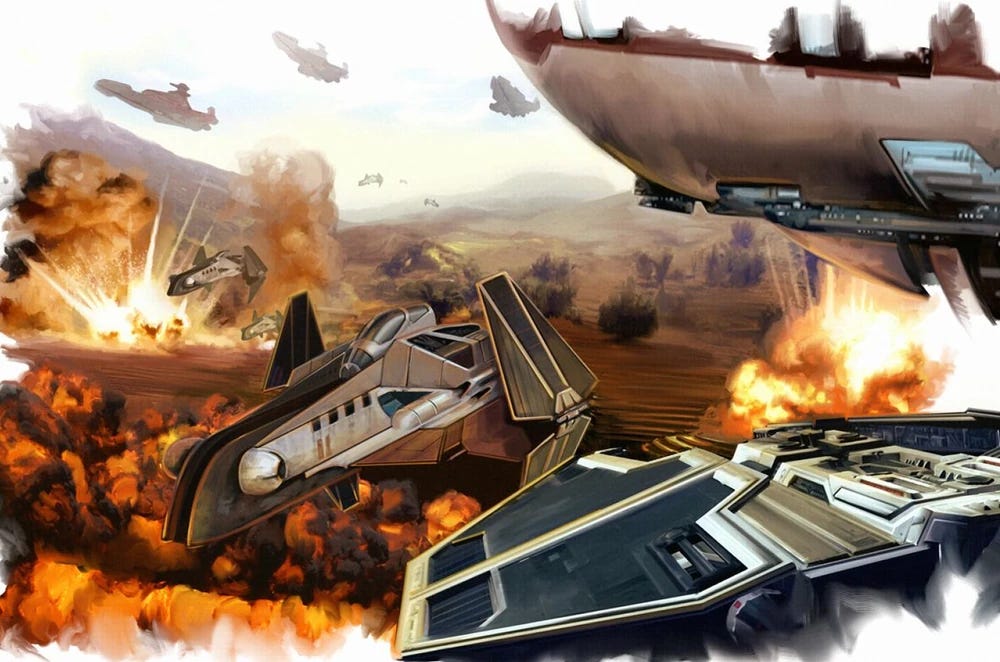
In 738 BBY, as Mandalorian hostility toward the Republic increased and rumours of a Mandalorian war of conquest reached Coruscant, the Republic grew concerned that a Mandalorian attack on the Core was imminent. In response to such concern, a Jedi led force, made up of Judicial Forces and Planetary Security Forces from around the Expansion Region, launched a pre-emptive strike on Mandalorian Space, bombarding the surface of several key Mandalorian worlds. While worlds like Ordo, Fenel, and Concord Dawn endured heavy bombardment, it was nothing compared to the devastation of Mandalore.
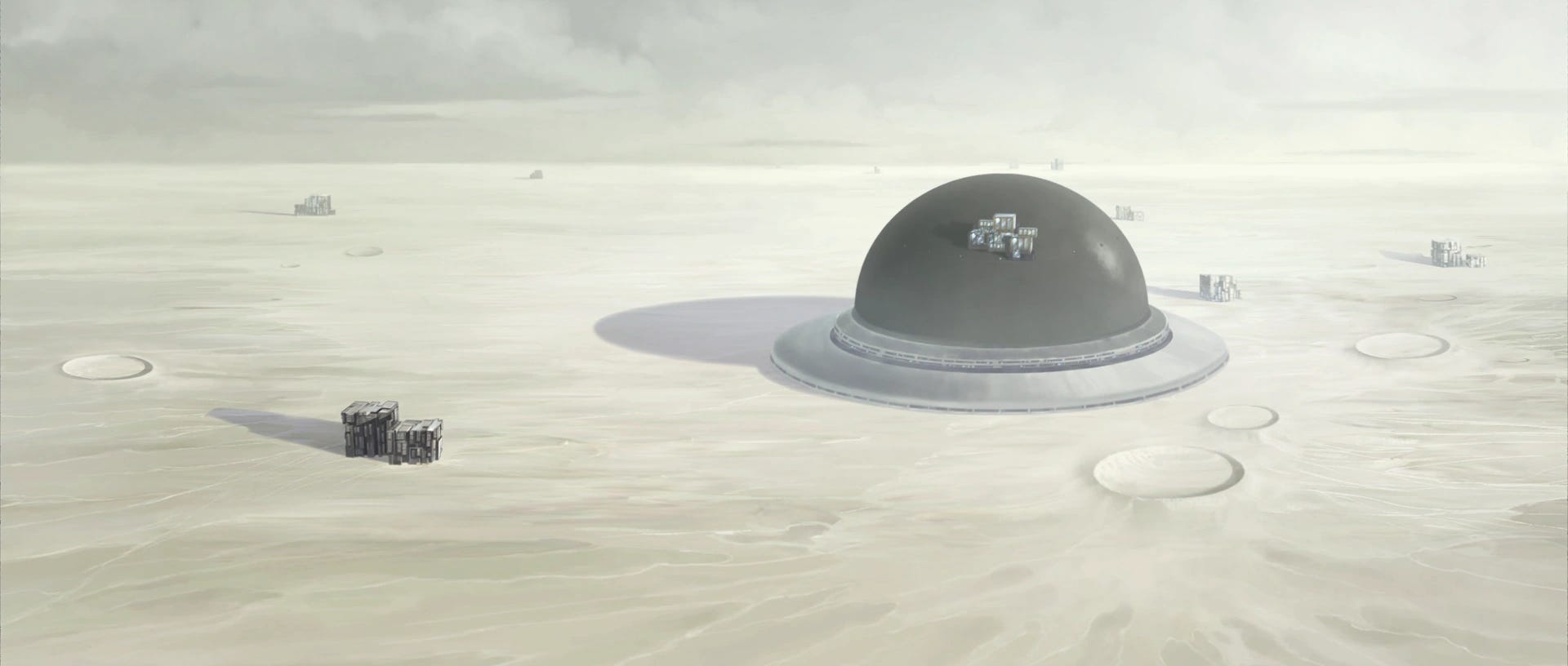
What would become known as the Dral’Han, or the Annihilation to Mandalorian natives, the Republic bombardment of Mandalore would leave the entire southern hemisphere of the planet completely uninhabitable. Those who still chose to live on the surface were forced to enclose their cities in gargantuan domes. While the southern hemisphere was devastated beyond recognition by the Republic attacks, the entire planet suffered harrowing destruction, and Mandalore descended into chaos. Mando’ade fled their home systems in their millions, and the sector, for a time, became a graveyard to many.
The Mandalorian Civil War
The New Mandalorians and the True Mandalorians lived in relative peace for another few centuries, but unrest began as some members of the Alor’a Aka’liit started pushing for the True Mandalorians to end the New Mandalorians and their ‘faithless’ state once and for all. In 60 BBY, a Journeyman Protector of Concord Dawn, Jaster Mereel, rose up to become Mand’alor, and swore to reform the True Mandalorians. Mereel pushed for a lasting peace to be made with the New Mandalorians, and began enforcing an honour code for all True Mandalorians and followers of the Resol’nare. This code of honour was rejected by the Alor’a Aka’liit who had been raised since birth by their forefathers to one day reclaim Mandalore from the New Mandalorians. The commander of the Alor’a Aka’liit, Tor Vizsla, rejected Mereel’s rule, and called for all those loyal to the creed to join him. Vizsla, taking the Darksaber for himself, declared himself the ‘Secret Mandalore’ of his followers, who he called the Death Watch.
Civil war broke out on Mandalore shortly after, stretching across all of Mandalorian space, True Mandalorians against the Death Watch, with the New Mandalorians choosing neutrality over supporting any side. In 58 BBY, on Concord Dawn, Tor Vizsla was seemingly killed in a climatic battle with Mereel’s forces, and the war experienced a brief respite. At the same time, Mereel rescued a boy, Jango Fett, from the clutches of Death Watch, and took him under his wing as his son before leaving Concord Dawn.
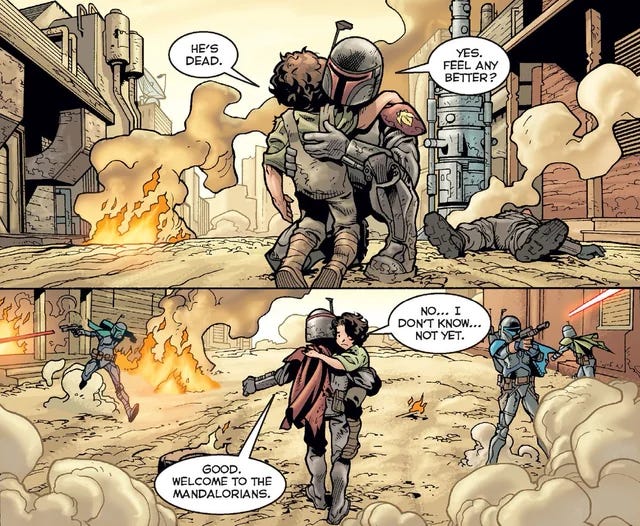
Fett joined the True Mandalorians in earnest, and became one of Mereel’s top lieutenants by 52 BBY. On Korda VI, Mereel was killed in a Death Watch trap, and Tor Vizsla revealed himself and the Death Watch to still be alive and waging war against the True Mandalorians. Vizsla and his forces retreated and went into hiding after the events on Korda VI, and Fett took up leadership of the True Mandalorians in memory of his fallen father.
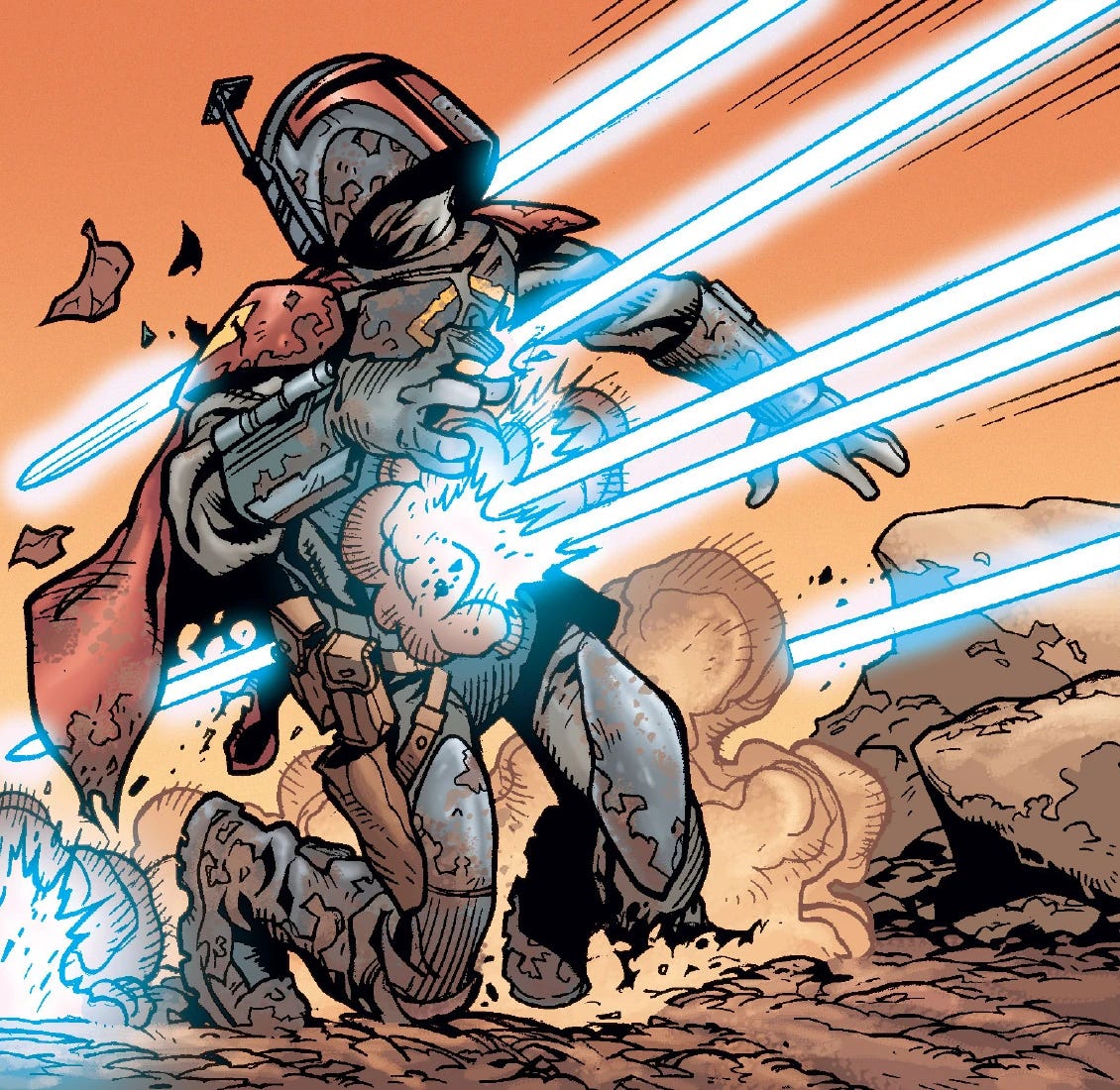
In 44 BBY, the True Mandalorians assisted the Governor of Galidraan in putting down an insurrection. When Jango Fett travelled to give news of the Mandalorian’s victory to the Governor, he was betrayed, and the Governor led him into a trap set by Tor Vizsla. Fett escaped, but as he did so, a Jedi taskforce arrived on Galidraan. The Governor had told the Republic that Mandalorians were slaughtering political activists along with the local populus, and directed the Jedi toward the True Mandalorians’ camp. The Jedi, led by Master Dooku, attacked the True Mandalorians, and in a bloody battle, left only Fett alive. The Jedi handed Fett over to the Governor of Galidraan, who subsequently sold Fett into slavery.
The Great Clan Wars
The capture of Fett and the massacre of the True Mandalorians plunged Mandalore into a new age of chaos beyond even the Mandalorian Civil War. The Great Clan Wars began almost the second that the True Mandalorians fell on Galidraan, and finally saw the New Mandalorians drawn into the conflict. The war was waged on all sides, and saw many clans vie for power in the chaos. House Kryze remained stalwart in their rule of Sundari, the Duke of Kalevala, Adonai Kryze became a well respected warlord of the New Mandalorians despite their society’s pacifism, even earning the respect of Death Watch, and for a time the war calmed itself. Mandalore began a fragile peace that was sustained until Adonai Kryze was assassinated and the war resumed. Needing an heir to the dukedom of Kalevala, all eyes turned to Kryze’s daughter Satine, who had been sent to Coruscant to study diplomacy for years.
In 41 BBY, Satine Kryze, now the Duchess of Kalevala returned to Mandalore to take up her father’s seat. In the wake of her father’s assassination, the new Duchess had decried the violence of her people, and had begun a renewed campaign of pacifism among Mandalorians. The New Mandalore movement gathered fresh steam under Kryze, and soon the Great Clan Wars turned into a more directed conflict. No longer was it a chaotic war of clan against clan. Now, the war was New Mandalorians against their traditionalist brethren.
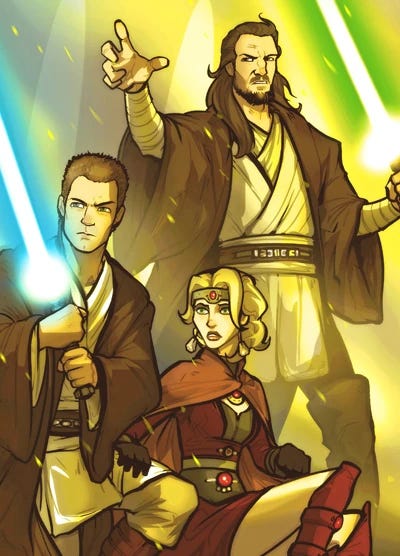
It wasn’t long before the majority of Mandalorian clans, weary of endless civil war, retreated to Keldabe and agreed to a ceasefire with the New Mandalorians, and the establishment of a demilitarised zone across the planet’s equator. Soon, the war was simply the New Mandalorians against the remnants of Death Watch, and without the backing of other, more moderate clans, the Death Watch cause began to fall apart, resorting to bounty hunters to keep target the New Mandalorians’ leader. The Republic, seeing an opportunity to back a promising future for Mandalore, and guarantee an end to Mandalorian civil conflicts, dispatched Jedi to protect the Duchess Satine. Jedi Master Qui-Gon Jinn and his padawan Obi-Wan Kenobi were dispatched as Kryze’s bodyguards in 41 BBY, defending the Duchess from Mandalorians and mercenaries alike.
Within a year, the New Mandalorians defeated Death Watch, and a peace treaty was signed. Clan Vizsla was granted the governorship of Mandalore’s moon, Concordia, under the assurance that Death Watch would never be refounded, and that those who once walked as members of the Watch would never return to Mandalore. The agreement was made, and Mandalore became a peaceful world for the first time in its millennia long history.
Conclusion
So that’s Part 1! I’ll be covering more of Mandalore’s history in the future, specifically the Clone Wars need a lot of work, but this article was getting pretty long as it was, and I wanted to make sure I addressed everything in a suitable amount of detail. The Mandalorian Visual Guide is coming out in the near future, so maybe I’ll need to make some amendments, but I’ll restack with those if needed in the future. If you have any questions, or alternative ideas for some things here, please reach out to me, so I can take a look and rework ideas if needed.